
SEO and AEO: what's the difference, and do you need both?
SEO is dead. Again. If you've worked in digital marketing for any amount of time, you've heard this before. Social media was going to kill search. Voice assistants were going to kill search. TikTok was going to kill Google. Now artificial intelligence is supposedly going to finish the job. Meanwhile, people are still searching. What's actually changing is where and how they search. And that's where AEO enters the conversation.
First: what is SEO?
SEO stands for Search Engine Optimization. At its simplest, SEO is the work of helping search engines understand your website and helping the right people discover it when they search.
That includes things like:
- Website structure
- Technical performance
- Keyword and audience research
- Useful content
- Local search optimization
- Google Business Profiles
- Links and authority
- Structured data
- Page titles and metadata
- User experience
SEO has never really been about stuffing magic words into a page. Good SEO is largely about making your website useful, understandable and technically accessible.
What is AEO?
AEO stands for Answer Engine Optimization. The term is generally used to describe efforts to improve a brand's visibility in systems that answer questions directly rather than simply returning a traditional list of links.
Think: ChatGPT. Google AI Overviews and AI Mode. Gemini. Perplexity. And other AI-assisted search experiences.
Instead of trying only to earn a high-ranking link, businesses are also becoming interested in whether their information gets cited, summarized or incorporated into an AI-generated answer. Hence the phrase we've been using frequently at OSD: Don't just rank. Be part of the answer.
So is AEO replacing SEO?
No. In fact, Google itself currently takes an even stronger position. Google says that, from its perspective, optimizing for generative AI search is still SEO because AI Overviews and AI Mode are rooted in Google's existing search ranking and quality systems. Its guidance specifically says foundational SEO practices continue to matter for generative AI visibility. That's important because the AI-search boom has inevitably created a new industry of hacks. Special files. Secret formatting. Guaranteed ChatGPT rankings. Magic schemas. Guaranteed mentions.
Be careful.
Google specifically says businesses do
not need special AI text files such as
llms.txt
to appear in Google's generative search features, and warns against chasing inauthentic mentions.
There is no single button labeled “optimize for every AI.”
What overlaps?
A lot. Imagine a useful service page that:
- clearly explains what you offer,
- answers customer questions,
- shows relevant expertise,
- loads properly,
- can be crawled,
- contains accurate information,
- and connects logically to the rest of your website.
That's a good SEO page. It's also the type of clear, useful information AI-powered search systems can work with. Google's current generative-search guidance recommends unique, valuable content, strong technical structure and established SEO fundamentals. So businesses shouldn't throw away the SEO playbook. They should expand it.
Where does AI search introduce something new?
Measurement is one big difference. Traditional SEO has familiar metrics:
- Rankings.
- Organic traffic.
- Clicks.
- Impressions.
- Conversions.
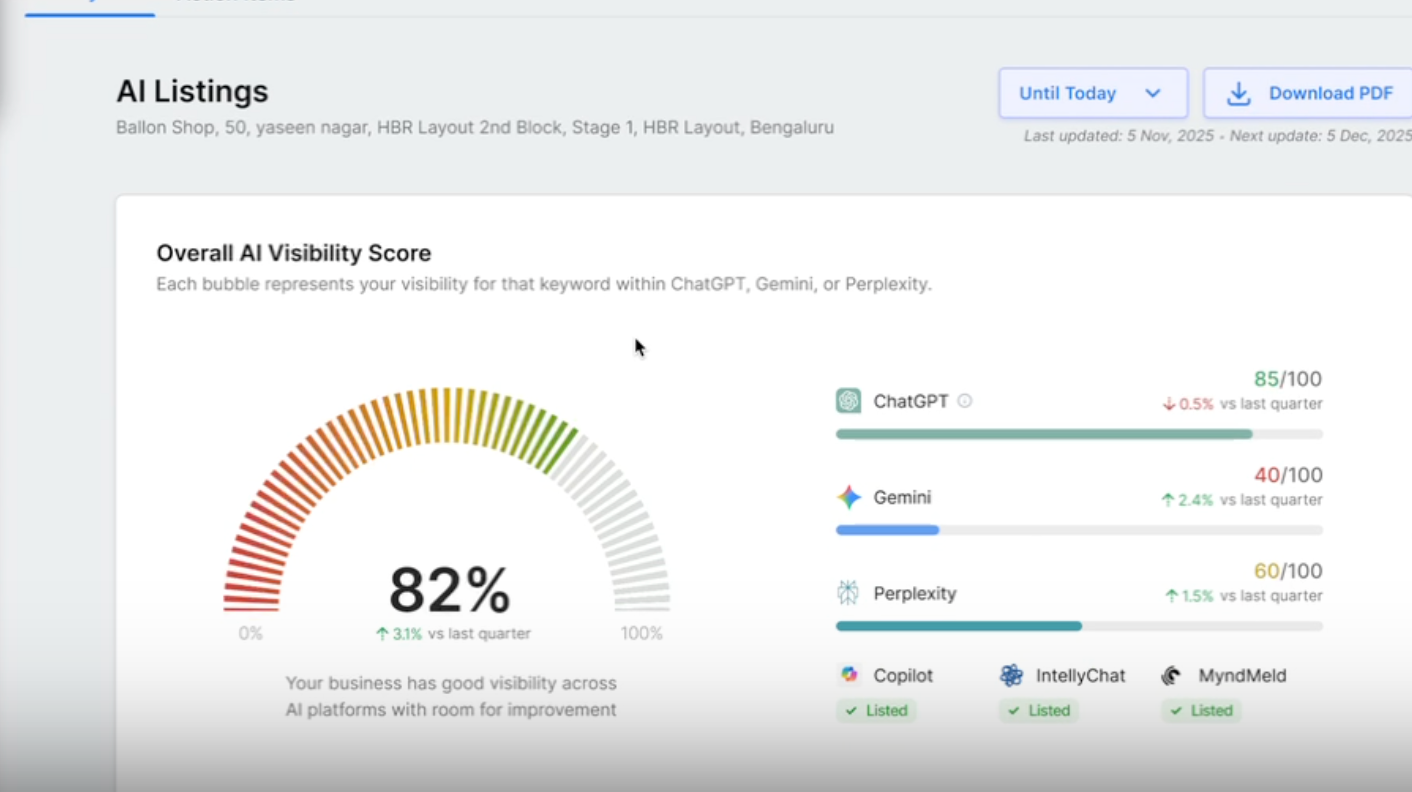
AI visibility introduces additional questions:
- Was our company mentioned?
- Were we cited?
- Which prompts triggered us?
- Which competitors appeared?
- How were we described?
- Which topics are we associated with?
That requires a different lens. And because AI answers can vary by prompt and platform, simply asking ChatGPT one question isn't the equivalent of checking a Google ranking.
What about ChatGPT specifically?
ChatGPT Search can retrieve current web information and link to relevant web sources. OpenAI uses OAI-SearchBot for search visibility and states that websites blocking that crawler won't be surfaced in ChatGPT's search results. So technical accessibility matters there, too. Again, not exactly a revolutionary concept. If you want search technology to use your website, make sure the search technology can access your website.
What should businesses do right now?
Don't panic. Don't cancel your SEO. Don't publish 400 AI-generated FAQ pages. Don't buy every new service with “GEO” in its name.
Instead:
1. Keep strengthening your SEO foundation.
2. Make your services exceptionally clear.
3. Answer the questions customers actually ask.
4. Publish original expertise rather than commodity content.
5. Keep reviews, listings and business information accurate.
6. Make sure search and AI crawlers can access appropriate public content.
7. Start monitoring AI visibility alongside traditional search performance.
That's a sensible strategy regardless of which acronym ultimately survives. SEO isn't dead. Search simply has more places to happen now.