
Importance of Customer Experience in Today’s Business Landscape
March 1, 2023
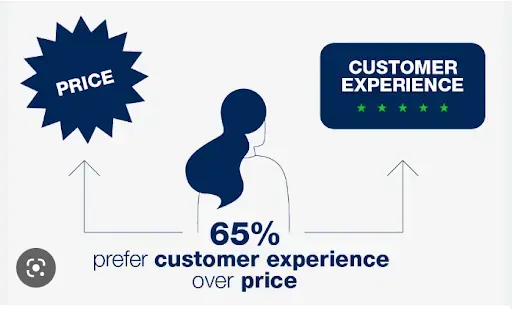
A graph showing a woman 's preference for customer experience over price.

Source: CADesignForm


Before we can move on to understanding how you can 
improve customer experience, it’s essential to know why it is important in the first place.


Here are some points of importance of customer experience in today’s business landscape-

  • It’s a competitive market where customers have multiple expectations, personalized experience being on the top of that list of expectations. This is why every organisation is focused on installing one or the other type of CRM.
  • Customer experience is ranked as the #1 factor in building customer trust and loyalty with a company.
  • Customer experience is a direct pathway to business success. The better the experiences you offer to your customers, the more they will keep coming back to you.


So, customer experience aligns with business success and profitability which makes it essential to focus on it. The need for you is to understand customer pain points and work directly on resolving them by coming up with practical and useful products, services, and solutions.

Once you do that, the customers will get more interactive with you and you can work on customer experiences, constantly improving them.


Role of Pre-sales in Shaping Customer Experience

Pre-sales teams are the first point of contact between a company and its potential customers. So, the customer journey begins at that stage and it is essential to offer a phenomenal experience here, because, obviously, first impressions matter.

So, pre sales teams play the most prominent role in shaping customer experience in the following ways-

  1. Attend to the customers efficiently to create a positive impression from the beginning of the customer journey.
  2. Create positive connection and interaction with the customers thereby leaving a lasting impact on them.
  3. Understanding the customer needs and demands in the early stages of the buyer journey and offering them exactly what they’re looking for.
  4. Setting the stage for final sale and building customer trust and loyalty for the long-term.


Steps to Improving Customer Experience Through Pre Sales

Pre-sales has the major role to play in shaping customer experience. If you shape customer experience during pre-sales, you positively move towards the path of driving more sales to your business. However, when you’re working on customer experience, you need to know how exactly you can improve it.


Hereinbelow are the different steps to improving customer experience through pre-sales.


Identifying Customer Needs and Pain Points

A deep understanding of the customer’s needs and pain points is essential for pre-sales teams. It’s only when you understand the customer pain points that you’re able to deliver them what they’re looking for. So, studying customer behavior and focusing on their needs is imperative.


You can do that through-

  • Market research
  • Customer feedback and interactions
  • Surveys
  • Organizational sales analytics and performance reports


Conducting Market Research

We can consider this step as a part of the first step itself. Market research gives deep insights into what’s trending, what the competition is doing, and where the customers are going. These insights in turn help you plan your pre-sales strategies.

You can perform the market research through the following activities-

  • Surveys and feedback forms
  • Brainstorming with your teams and talking about latest market trends
  • Using insights from market statistics and analytics


Developing a Customer-Centric Pre-sales Strategy

Once you have got the relevant information about your customer needs and preferences through your research, you must start preparing a pre-sales strategy. It’s essential that your pre-sales strategy revolves around the basic needs of the customers.

You need to identify the key areas that are customer centric. This helps demonstrate the value of offerings and build a relationship with the customer on mutual understanding, trust, and a shared focus on the customer’s needs and goals.


Identifying Areas of Impact

Pre-sales teams should identify the areas where they can have the biggest impact on customer experience. This can be achieved by focusing on product demonstrations, proposals, and presentations.


These activities should be designed to meet the customer’s specific needs and demonstrate the offering’s value. By focusing on these areas, pre-sales teams can deliver a more positive customer experience and increase the chances of closing a sale. This approach shows the customer that the company values their needs and is dedicated to providing a solution that meets their requirements.


Aligning Pre-sales Activities with Customer Experience Goals
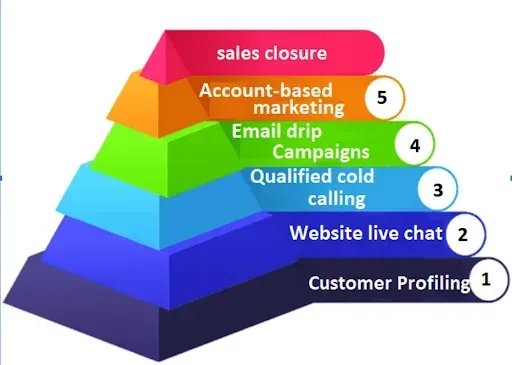
A pyramid showing the stages of sales closure

Source: Livprop

Pre-sales activities refer to the actions taken by a company before a sale is made, such as product demonstrations and customer presentations. Aligning pre-sales activities with the overall customer experience goals helps to ensure that pre-sales teams are working towards the same objectives as the rest of the organisation.


This helps ensure that customer experience is consistent across all touchpoints and that pre-sales teams contribute to the overall customer experience. By doing so, the pre-sales team can provide relevant and helpful information and create a seamless customer experience from the first touchpoint to the sale. This helps build trust and confidence in the company and increases the likelihood of customer loyalty and repeat business.


Training Key Pre-sales Personnel

Training key pre-sales personnel on customer experience best practices helps them understand the importance of delivering a positive customer experience. It provides them with the skills they need to do so effectively.


This training should include topics such as

  • Active listening: Active listening involves paying close attention to what the customer is saying. It demonstrating that you understand their needs and concerns, and responding appropriately. 
  • Empathy: Empathy is another important skill. It helps pre-sales personnel understand the customer’s perspective. It also helps to respond in a way that is helpful and understanding.
  • Problem-solving: Problem-solving skills are also important. They enable pre-sales personnel to quickly and effectively resolve customer issues. It ensures a positive experience for the customer.


By equipping pre-sales personnel with these skills, they can effectively engage with customers and deliver a more positive customer experience.


Measuring and Analyzing Pre-sales Performance

Measuring and analysing pre-sales performance involves tracking and evaluating key metrics related to the pre-sales process, such as the number of opportunities generated, conversion rates, customer satisfaction scores, and average deal size. This information provides valuable insights into the effectiveness of the pre-sales strategy and the performance of individual pre-sales team members.


By regularly reviewing this data, organisations can identify areas where improvements can be made, such as by increasing the number of qualified leads, improving conversion rates, or enhancing the customer experience. This information can then be used to adjust the pre-sales strategy. This may involve changes to the sales process, training and development for pre-sales team members, or the marketing and sales collateral used to support pre-sales efforts.


Establishing Metrics to Measure Pre-sales Performance and Customer Experience

To effectively measure pre-sales performance and customer experience, pre-sales teams should establish metrics. These metrics should be specific, measurable, and aligned with the overall customer experience goals. Metrics such as customer satisfaction, engagement, and retention can be used to measure pre-sales performance and the impact on customer experience.


Analysing Data

Data analysis is a critical part of pre-sales best practices. By analysing customer feedback, pre-sales performance, and market trends, pre-sales teams can identify areas for improvement and make adjustments to the pre-sales strategy as needed. This helps to ensure that they are delivering a positive customer experience and driving better business results.


Based on the results of data analysis, pre-sales teams can make adjustments to their pre-sales strategy as needed. This can include changes to product demonstrations, proposals, and presentations, as well as changes to the overall customer experience approach. By continuously refining their pre-sales strategy, pre-sales teams can deliver a better customer experience and drive better business results.


Are You Ready to Deliver the Most Amazing Customer Experiences?

Pre-sales teams play a crucial role in improving customer experience. They set the stage for a positive customer experience and shape the perception of the company from the first point of contact.


To deliver the best possible customer experience, pre-sales teams must first understand the needs and pain points of their potential customers through active listening and market research. They then develop a customer-centric pre-sales strategy and align their activities with overall customer experience goals.


Pre-sales personnel must be trained on customer experience best practices and performance. It must be measured and analyzed regularly to identify areas for improvement. By focusing on these key steps, pre-sales teams can drive better business results and it can deliver a positive customer experience that helps to establish lasting relationships with customers.


Now that you understand the importance of pre-sales in improving customer experience, it’s time to take action!

Embrace the best practices outlined in the article and start making a positive impact on your customers today. The time to take your customer experience to the next level is now.


Author’s Bio: Shweta is a growth marketing specialist who is working with 2xSaS. She creates content that converts website visitors into paying customers for SaaS companies. In her free time, she likes driving around the city & hanging out with her friends.

Author’s Headshot

Email: Shweta@2xsas.com

June 1, 2026
The body content of your post goes here. To edit this text, click on it and delete this default text and start typing your own or paste your own from a different source.
May 29, 2026
Business owners and team leaders rely on software systems to keep operations running smoothly. Yet many organizations unknowingly operate on a patchwork of disconnected tools—separate platforms for monitoring, ticketing, cybersecurity, performance tracking, and reporting. The result? Operational gaps that rarely show up in a dashboard—but surface at the worst possible moment. When systems don’t talk to each other, blind spots form. Those blind spots impact visibility, incident response, and ultimately, decision-making. What’s Really Happening Beneath the Surface When teams rely on siloed systems, several patterns emerge : Monitoring tools detect issues, but alerts don’t reach the right teams. Security platforms log threats, but context isn’t shared with support. Performance data lives in one dashboard, operational metrics in another. Leadership receives incomplete reports stitched together manually. These gaps are rarely dramatic at first. They show up as slow troubleshooting, unclear accountability, or inconsistent data between departments. Over time, they compound. Quick Takeaways for Leaders If your technology stack is fragmented, you’re likely experiencing: Slower response times during outages Increased exposure to cybersecurity risks Duplicate work across teams Inconsistent performance reporting Poor cross-functional coordination  Integration isn’t just about convenience. It’s about operational resilience. How Fragmented Architecture Creates Blind Spots Disconnected tools introduce risk in four major areas:
May 21, 2026
The digital landscape has shifted. If you’re still designing websites for the search engines of 2010, you’re already behind. Today, we aren't just designing for human eyes or legacy keyword crawlers; we are designing for the sophisticated, intent-driven algorithms of Artificial Intelligence. At Olive Street Design, we don’t just build websites that look good. We build websites that help businesses grow. As a premier Duda Fulfillment Partner with over 3,500 sites launched and 97 awards, we’ve learned what it takes to create websites that are both beautiful and easy to find online. To put it simply: great web design and smart search strategy work better together. Here’s how we combine both to help your business get noticed and grow. Beyond Keywords: Focus on What People Need AI search tools like Google’s AI Overviews, Perplexity, and ChatGPT look beyond single keywords. They try to understand what people are really asking and which businesses offer the best answers. When we start a custom design project, we begin with strategy. We look at what your business does, who you help, and what makes you different. Then we shape your website so both people and search tools can quickly understand your value. Our approach focuses on: Clear Answers: We write content in a way that quickly answers common questions. Organized Pages: We build pages in a clear, easy-to-follow way so your content makes sense at a glance. Helpful Content: We create content that gives people useful information and builds trust. Design Matters: How Search Tools Read Your Site In AI search, your website’s layout matters. A site can look amazing, but if it’s confusing or hard to load, it can still struggle to perform. Search tools favor websites that are clear, fast, and easy to understand.
May 18, 2026
A great website shouldn’t just represent your brand—it should actively grow it. That’s why we’re excited to be featured in “Level Up Your Website: Most Impactful Web Design Agencies in USA [2026]” by David Watson on Medium. This feature highlights agencies that are helping businesses move beyond outdated, static websites—and into digital experiences that actually drive momentum. The shift: from websites to growth engines For many businesses, a website is still treated like a digital brochure. But the reality is: If your website isn’t converting, guiding, and scaling with your business—it’s holding you back.  The agencies recognized in this list are setting a new standard: Faster, more responsive performance Clear, intentional user journeys Built-in scalability for growth Strong alignment between design and business goals How we approach that at OSD At Olive Street Design, we don’t start with design—we start with purpose. Every build on the Duda platform is engineered to answer one question: What does this website need to do for the business? From there, we create: Fully custom, mobile-responsive environments Seamless e-commerce functionality Clean, efficient code for speed and security Strategic layouts that guide users toward action It’s not about adding more—it’s about removing friction. Beyond launch: where real value happens Most websites peak the day they go live. Ours are built to improve over time. Through ongoing maintenance, optimization, and performance tuning, we help our clients stay competitive in a landscape that’s constantly evolving. Because long-term growth doesn’t come from a one-time build—it comes from continuous refinement. Final thought Being recognized as an “impactful” agency isn’t about design trends or visual style. It’s about outcomes. And at the end of the day, the only thing that matters is this: Is your website helping your business grow? If the answer isn’t a clear yes, it may be time to rethink what your website is capable of. Read full article here
April 22, 2026
We’re proud to share that Olive Street Design has been recognized in the article “Best Web Design Companies in the USA [2026]” by Jacob Josi, Co-Owner of DesignDrizzle. This recognition highlights agencies that are not only shaping the visual landscape of the web—but redefining how websites perform as business tools. What this recognition means Being included among the top web design companies in the U.S. reflects a shift in what businesses truly need from their websites today. It’s no longer enough to simply “look good.” Modern websites must: Load fast Convert consistently Scale with growth Deliver seamless user experiences across devices At Olive Street Design, that’s exactly where we focus. Our approach As noted in the feature, our team specializes in building high-performance, conversion-driven websites on the Duda platform. We combine: Bespoke, modern design Mobile-first optimization Streamlined coding for speed and security Integrated e-commerce functionality The goal isn’t just to create a website—it’s to build a digital experience that turns traffic into revenue. Built for performance and longevity What sets Olive Street Design apart is our commitment beyond launch. We provide: Ongoing technical maintenance Performance optimization Scalable infrastructure for growth This ensures every site continues to evolve alongside the businesses we serve. Final thoughts We’re honored to be recognized among the top web design agencies in the country—and even more motivated to continue delivering websites that don’t just exist, but perform. If your website isn’t driving measurable growth, it may be time to rethink what’s possible. View the article at https://medium.com/@davidwatson001/level-up-your-website-most-impactful-web-design-agencies-in-usa-2025-f5936f48be19
April 13, 2026
This is a subtitle for your new post
March 20, 2026
Small business owners in Chicago often do everything right in the shop or on the job, then wonder why the online side feels stuck. The most common digital presence challenges are simple but stubborn: low website traffic that never turns into calls, online brand consistency that slips across platforms, and beginner digital marketing struggles that make every decision feel like guessing. Add Chicago’s crowded local competition, and even solid businesses can look invisible online. Naming these gaps clearly makes it easier to build a presence that matches the quality of the work. Quick Summary: What to Do and Why It Works Create engaging content that builds trust, increases visibility, and motivates people to take action. Use SEO basics to help your pages rank, earn clicks, and attract more qualified website traffic. Share content on social media to expand reach, spark conversations, and drive visitors back to your site. Focus on clear messaging and useful information so your digital presence feels credible and easy to choose. What “Digital Presence” Really Means Digital presence is not just your website. It is the sum total of everywhere your business exists online , including search results, social profiles, listings, and reviews. Engaging content is what makes those touchpoints feel consistent and trustworthy, so people remember you. This matters because many buyers compare options fast, and 85 percent of consumers trust online reviews as much as personal recommendations. When your posts, pages, and review responses feel aligned, you win more clicks, calls, and walk ins. To stay focused, track a few simple signals like clicks, comments, saves, shares, and contact form submissions. Think of your online brand like a storefront window. Strong content is the display that stops people, answers quick questions, and guides them inside. Metrics are your foot traffic count, showing what attracts real interest. Build and Optimize Content That Drives Local Demand For Chicago small business owners, this process helps you turn scattered online touchpoints into a consistent content system that supports better web design and smarter digital marketing. You will tighten your site, publish with purpose, and make it easier for people to find, trust, and contact you. Lock in your brand basics across channels Start with three decisions you can repeat everywhere: your promise (what you do best), your tone (friendly, expert, bold), and your visual rules (2 to 3 colors and 1 to 2 fonts). Write one short bio and one service description you can reuse on your website, Google Business Profile, and social pages. Consistency makes your content feel familiar, which speeds up trust. Tighten key website pages before publishing more Choose your top three pages that should convert visitors: Home, Services, and Contact. On each page, add one clear headline, one proof point (review snippet, award, or years in business), and one obvious next step like “Call” or “Request a quote.” This ensures any social post or search click lands on a page that is easy to act on. Plan content from real customer questions Make a quick list of 10 questions customers ask before buying, then turn each into a post, short video, or FAQ. If you get stuck, use a simple framework like the phase 1 of content creation, ideation approach and pull ideas from calls, emails, and reviews. This keeps content practical, not random, and it naturally supports your Services page. Add beginner SEO so the right people can find you For each piece, pick one main topic phrase and use it in the page title, a main heading, and the first paragraph. A helpful rule is to figure out keywords your customers would type, then match your wording to those searches. Finish by linking the content to one related service page so visitors can move from learning to buying. Repurpose for social and measure what triggers action Turn one content piece into three social posts: a tip, a behind the scenes photo, and a short customer story, all pointing back to the same page. Track just a few signals for two weeks: profile visits, saves, clicks, and form submissions, then double down on the format that drives the most clicks. Small improvements, repeated weekly, compound quickly. Content and SEO Questions, Answered Simply Q: How can I create content that consistently attracts more visitors to my website? A: Start by publishing what buyers actually ask before they contact you, then aim each piece at one clear search intent. Make every post earn a next click by linking to a relevant service and ending with one specific call to action. Remember that measurable results often build over time, so consistency beats bursts of activity. Q: What are the best strategies to maintain a cohesive brand image across all digital platforms? A: Use one “core message” you repeat everywhere: who you help, what you solve, and what makes you different. Keep your visuals simple and consistent, and reuse the same short bio and service descriptions so people recognize you instantly. Save everything in a one page brand sheet your team can copy and paste from, and this may help if you want a quick example of how others share their stories. Q: How do I overcome feeling overwhelmed by the constant need to update and manage digital content? A: Shrink the workload by setting a small publishing rhythm you can keep, like one helpful update a week. Batch one hour to draft, one hour to schedule, then reuse the same idea as a post, a photo caption, and a quick email. It also helps to accept that SEO is ongoing so you focus on progress, not perfection. Q: What simple steps can I take to improve my website's search engine ranking without spending a fortune? A: Clean up your page titles and headings so each key page clearly matches what people search for. Add internal links from blog posts to your main services, and make sure your contact info is consistent across the web. One technical win that is often overlooked is to create XML sitemap so search engines can find your pages faster. Q: What resources can help if I feel stuck and unsure how to effectively grow my online presence from scratch? A: Begin with your customer questions, reviews, and sales emails, then turn them into a simple content list you can work through one by one. If you need structure, use a basic content calendar template and a checklist for each post: topic, keyword phrase, proof, and next step. When you are unsure, ask a trusted web or marketing pro to review your top pages and give you just three priorities. Build Long-Term Digital Success With Consistent Chicago Content In a busy week, it’s easy for a Chicago business to post once, then disappear and lose momentum. The steady approach is simple: consistent content creation guided by clarity, usefulness, and real connection, not chasing every new trend. Stick with it, and engagement measurement becomes a helpful compass, showing what your audience responds to and where to refine your message while you keep ongoing online presence management under control. Consistency turns local attention into long-term trust. Choose one weekly habit, publish one helpful post, review basic engagement, and make one small update to your profile. That repeatable rhythm is what keeps visibility, relationships, and resilience growing even when schedules get packed.
March 11, 2026
For Chicago-area local business owners and first-time e-commerce founders in their 20s and 30s, going online can feel less like a launch and more like a maze. New e-commerce entrepreneurs face the same business startup obstacles early on: choosing what to sell, creating a brand that looks credible, and getting seen in a crowded feed without wasting months. Add limited technical confidence and inconsistent marketing, and the challenges of starting an online business can stall momentum before the first sale. With the right focus, millennial and Gen Z entrepreneurs can build a store that’s clear, cohesive, and ready to grow. Quick Summary: Launch Steps That Build Confidence Choose a clear e-commerce niche by aligning customer demand with your strengths. Validate your idea with market research that studies competitors, pricing, and customer needs. Select an e-commerce platform that fits your budget, skills, and growth goals. Build a user-friendly website with simple navigation, strong product pages, and a smooth checkout. Grow with digital marketing and responsive customer service that earn trust and repeat sales. Build Your First E-Commerce Store Step by Step This process helps you choose the right niche, validate demand, pick a platform, and publish an accessible store you can actually market. For local business owners, it reduces costly rework and ensures your website and digital marketing start with clear messaging, inclusive design, and measurable goals. Pin down a niche you can serve well Start with one specific customer group and one clear promise, such as “easy-to-use ordering for busy families” or “sensory-friendly product pages for sensitive shoppers.” Look for gaps where competitors are not meeting real needs, since a competitive landscape analysis helps you spot underserved segments you can win with better clarity and accessibility. Set your research goal and compare competitors Decide what you need to learn first: pricing ranges, best-selling products, shipping expectations, or how others earn trust online. Let Clear objectives shape the type of data you gather so you do not get overwhelmed and you end up with decisions you can act on. Choose an e-commerce platform that supports growth and accessibility Compare a few platforms based on budget, ease of updating products, built-in SEO, and integrations for email, payments, and inventory. Prioritize mobile-friendly themes, strong keyboard navigation, readable typography, and simple editing so your store stays accessible even as you add new products and promotions. Build the store basics before adding “extras” Create a clean structure with a homepage, category pages, product pages, a cart, and a straightforward checkout. Add the essentials that reduce friction: clear shipping and returns, contact options, and product details that answer common questions, then test the full purchase path on a phone. Strengthen pricing, marketing, and operations with a learning path Choose one structured course or program that covers pricing, offers, basic bookkeeping, and marketing planning, and apply one lesson per week directly to your store, whether that’s a short course or pursuing a business degree . This turns guesswork into a repeatable system, so you can set margins confidently, track what campaigns work, and build simple processes for support and fulfillment. Plan → Promote → Protect → Support → Improve To keep momentum after launch, use this weekly operating rhythm. It helps local business owners stay consistent across accessible web updates, practical marketing, and reliable operations, so growth is not dependent on last-minute pushes. It also creates a simple feedback loop where customer questions and checkout behavior guide your next improvements. Treat each stage as a handoff: promotion brings visitors, protection prevents drop-offs, and fulfillment plus support converts first-time buyers into repeat customers. Over time, this cadence reinforces the defined niche and value proposition your marketing and product pages should communicate. E-Commerce Launch Questions Business Owners Ask Q: What’s the simplest tech setup that still looks professional and accessible? A: Start with a reliable storefront platform, a clean theme, and a short menu: Shop, About, Shipping, Contact. Make every page easy to scan with clear headings, readable contrast, and obvious buttons. Decision rule: if a new customer cannot find price, shipping cost, and how to contact you in 15 seconds, simplify. Q: How do I keep marketing momentum without posting everywhere? A: Pick one primary channel where your customers already spend time, then commit to two helpful posts per week plus one email. Use one offer at a time and repeat it for 7 to 14 days so people actually notice it. Consistency beats variety when you are building trust. Q: Should I prioritize mobile optimization right away? A: Yes, because 60% of web traffic comes from mobile devices . Test your site on your phone: product images should load fast, buttons should be thumb-friendly, and checkout should not require zooming. Decision rule: if checkout feels annoying on mobile, fix that before running ads. Q: How do I make payments feel safe for customers? A: Use a well-known payment processor, enable SSL, and turn on basic fraud screening and address verification. Do a real test order weekly and confirm emails, taxes, and shipping rates are correct. Keep refund and privacy policies easy to find, not buried. Q: What customer service standard should I set when it’s just me? A: Promise what you can consistently deliver, like replies within one business day and shipping updates at each milestone. Build a “Help” page that answers your top five questions, and add those answers to product pages where confusion starts. Remember that acquiring a new customer is six to seven times more expensive than retaining one, so fast, clear support protects your profit.  Take Three Confident Steps Toward a Profitable E-Commerce Launch Launching an online store can feel like a tug-of-war between moving fast and fearing expensive mistakes. The path forward is a steady, customer-first approach: get clear on what you sell, build trust, and refine as real orders and feedback come in. When those fundamentals are in place, the benefits of an e-commerce business, new revenue, wider reach beyond Chicago, and smoother operations, start compounding, and entrepreneurial motivation has something concrete to build on. A successful store is built on clear offers, trusted payments, and consistent service, not perfect timing. Choose your next 3 actions for business launch and complete them this week to set a launch date this month. That momentum is what turns a first sale into long-term growth strategies and a more resilient business.
More Posts